


 Podcast
 Sign Up
 Virtual Learning
 Online CEUs
 Streaming Video Library

Chris Difford is famous in the music world as the guitarist, lyricist and occasional lead vocalist for the British band Squeeze, which came to prominence in the United Kingdom in the late 1970s and gained popularity in the United States in the early 1980s as part of the “Second British Invasion,” fueled in part by the launch of MTV in 1981.
Chris Difford was born on November 4, 1954, in Greenwich, London, the youngest of three sons born to Sidney and Isabel Difford. His mother was a native of Belfast, Northern Ireland, and his father met her while stationed there during World War II. Leaving school at age 16, Difford was intent on pursuing music, but his parents insisted that he get a “regular job.” He tried various jobs but eventually devised a plan. In his 2017 autobiography, Some Fantastic Place: My Life in and out of Squeeze, Difford recalls how he first connected with Glenn Tilbrook in April 1973: “I put an advert in a shop window for a guitarist to join a band. I had no band. It said I had a pending record deal and a tour lined up. I had neither deal nor tour. The advert cost me 50p—I took the money from my mum’s purse. That 50p got me to where I am today, which is some journey.…Maxine, Glenn’s girlfriend, talked him into calling the number on the ad.”
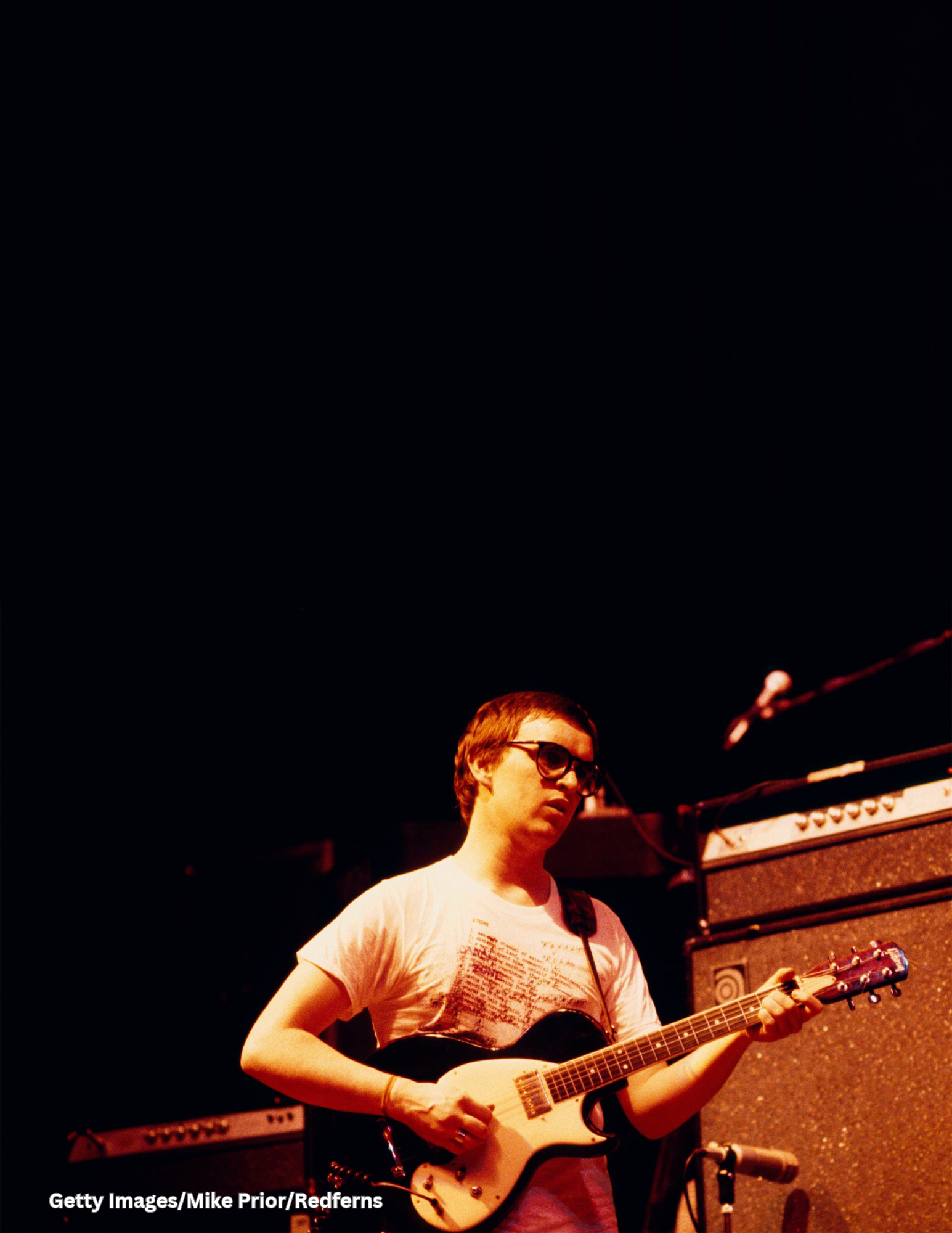 Thus, the famed songwriting team of Difford and Tilbrook was formed in 1973, when Chris Difford was 19 and Glenn Tilbrook was 16. The two spent endless hours writing hundreds of songs and formed various configurations of pub bands. The name Squeeze was taken from the title of The Velvet Underground’s 1973 album Squeeze. The lineup for their self-titled 1978 debut album included Difford and Tilbrook on guitars and vocals, founding member Jools Holland on keyboards, Gilson Lavis on drums and Harry Kakoulli on bass. The second album, Cool for Cats, was released in 1979 and gave the band its two highest-charting singles in the United Kingdom: “Cool for Cats” and “Up the Junction,” both of which reached No. 2. “Cool for Cats,” which features Chris Difford on lead vocals, remains one of the band’s best-known songs.
For the third album, John Bentley replaced Harry Kakoulli on bass and became a mainstay with the band. Argybargy was released in 1980 and proved to be a breakthrough of sorts, as the singles “Another Nail in My Heart” and “Pulling Mussels (from the Shell)” received airplay on rock stations in both the United States and Canada. The year also proved to be a transitional one for the band: Jools Holland left to pursue a solo career and was replaced on keyboards by Paul Carrack. At the time, Carrack was best known for fronting the 1970s British band Ace, which had the classic 1974 hit “How Long,” written and sung by Carrack. Carrack, who stayed with Squeeze for one album and a tour, famously sang lead vocals on “Tempted,” which appeared on the 1981 album East Side Story. Difford wrote the song’s lyrics while the band was taking a taxi to Heathrow Airport; its description of a failing relationship is interspersed with references to sights in London and at the airport. The song saw a resurgence in 1994, when the band remixed and overdubbed the original recording for a new version used in the movie Reality Bites. Over the years, Carrack has rejoined Squeeze for concerts on special occasions.
“Tempted” coincided with the 1981 launch of MTV, which helped bring Squeeze to a wider U.S. audience. During the network’s first year and a half, many of the videos in its rotation featured British and Australian bands. Older Squeeze videos received regular airplay, as did the newer “Tempted” and “Black Coffee in Bed.” However, just as Squeeze had established a strong foothold in the United States through MTV and the release of the 1982 greatest-hits album Singles—45’s and Under, the band broke up in late 1982.
In a May 12, 2007, an article in The Telegraph, “They Never Thought It Would ’Appen,” Difford commented on how the band never reached the commercial heights its early hits had promised: “We missed the boat. We missed several boats. Ocean liners, pedalos. Some of our own doing, and some of doings well beyond our sphere of influence.”
Early on, many critics described the Difford-Tilbrook songwriting partnership as the heir to Lennon-McCartney, a comparison that did not sit particularly well with the duo.
Squeeze reformed in 1985 with Jools Holland back in the lineup and disbanded again in 1999. The band reunited in 2007 to tour the United Kingdom and the United States. Along the way, Squeeze has delivered highly acclaimed albums of new material, including Cradle to the Grave in 2015 and The Knowledge in 2017.
There have been numerous lineup changes, with many members leaving and returning. Sadly, longtime drummer Gilson Lavis—a hero to the members of Squeeze and an entire generation of drummers—died in 2025.
In his 2017 autobiography, Difford addressed his stammer and its effect on his early school years: “My stammer and my lack of self-confidence slowed me down. I sat at the back of the class next to kids who chewed crayons and threw paper and rolled nose-pickings into a matchbox. I went to elocution lessons in Deptford to try and correct my speech impediment. I was always gasping for words with my friends at school and this always made me feel one step behind the rest.”
He became aware of his stuttering when he was seven or eight years old and trying to converse with his peers. Of his elocution lessons, he said, “From memory, I think they used headphones and noises that repeated in my ears while I filled in a board with plastic pins.”
Difford still remembers difficult experiences with his speech: “Mostly when I was a teenager, and also when I had to talk about our songs on tour to a journalist, I think this was joined with the amount of drink I was using at the time and later drugs, too.”
Difford says no one else in his family has stuttered. He feels that his stammer fueled his creativity as a songwriter and musician. “It made me still and quiet. I spent many hours on my own working with my imagination and not saying much, and that has not changed.”
When asked how he coped with stuttering and what advice he has for others, he said: “I coped with it all and took it on the chin. Keep it simple. Don’t rush and own your voice, your words and the things you say.”
In 2026, Chris Difford and Glenn Tilbrook find themselves in a most interesting place. When they first connected in 1973 through the advert in a candy-store window, they wrote countless songs. Among them was a rock opera called Trixies, which was never recorded. Fifty-two years later, the album was finally recorded by Squeeze and released on March 6, 2026. Conceived in the tradition of the concept albums popular at the time, it tells of the goings-on at a fictitious London nightclub called Trixies. It existed entirely in Difford’s imagination: he was reading a great deal of Damon Runyon at the time, and the two teenagers were too young to enter nightclubs. While Squeeze’s self-titled 1978 debut album helped establish the band in the British New Wave genre, the musical template for Trixies drew from the years 1971–1974, including David Bowie, Wings and Sparks, with touches of Stevie Wonder and the Beach Boys.
Difford and Tilbrook were awestruck when they saw Elton John perform his 1975 concept album Captain Fantastic and the Brown Dirt Cowboy in its entirety, and they plan to do the same with Trixies. Squeeze will tour the United States in summer 2026, headlining the Hollywood Bowl for the first time in the band’s career. The tour will also feature new Squeeze material beyond Trixies. Future plans include adapting Trixies as a musical for the West End and Broadway.
More than five decades after Chris Difford and Glenn Tilbrook connected through an advert in a London candy-store window, the highly successful songwriting partners are still writing songs and performing together as Squeeze. The stuttering community can be proud of Difford’s accomplishments, both as a recording artist and as someone who has met personal challenges with perseverance. His example of determination and achievement continues as Squeeze’s success endures.
From the Fall 2026 Magazine